
There is a particular sound that supermarkets never have. It's the sound of a market waking up — crates being stacked, someone calling out the price of today's artichokes, a dialect greeting passed between stalls before the customers even arrive. I found it again this week at Mercato Trionfale in Rome, camera in hand, trying to understand something I'd always taken for granted: the way my grandmother used to shop.
She never made a list. Or rather — she made one every single day, and it was never written down. It lived in her hands, in her nose, in the questions she asked the men and women behind the stalls she'd known for twenty years.
A Relationship, Not a Transaction
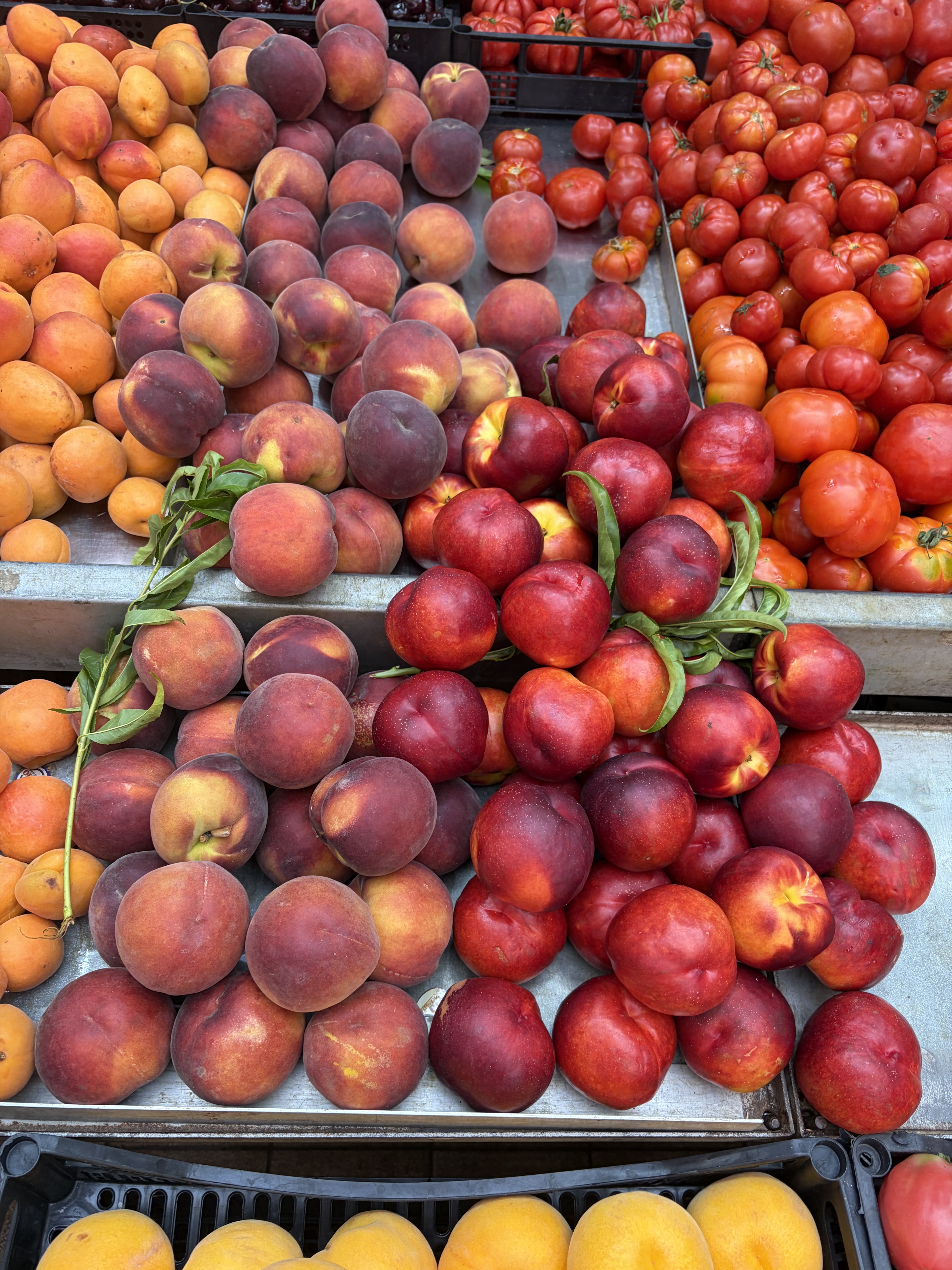
Standing at Trionfale, watching a vendor lean over the counter to recommend which peaches were ready today and which needed one more day on the windowsill, I understood something about my nonna's world that I'd never quite named before. With the vendor, you build a friendship. He gives you advice, he helps you choose, he remembers what you liked last week. These are small, daily human relationships — and they're exactly what make you feel part of a community, not just a customer.
There's no algorithm recommending the ripest fruit. There's a person who has handled a thousand peaches this month alone, and who wants you to have a good one.
Choosing With Your Hands
The other thing I noticed — the thing you can't get from a delivery app or a plastic-wrapped tray — is touch. At the market, you can actually touch the fruit and vegetables. The choice happens after direct contact with the product: the weight of a tomato in your palm, the give of a peach's skin, the smell released when you lift a bunch of basil to your face. You're not choosing based on a photo or a label. You're choosing based on what the object itself tells you, right now, in this moment.
It sounds like such a small thing. But it changes the entire relationship you have with food before it's even food yet — before it's dinner, it's already something you noticed, handled, decided on with your own senses.
A Different Kind of Trust
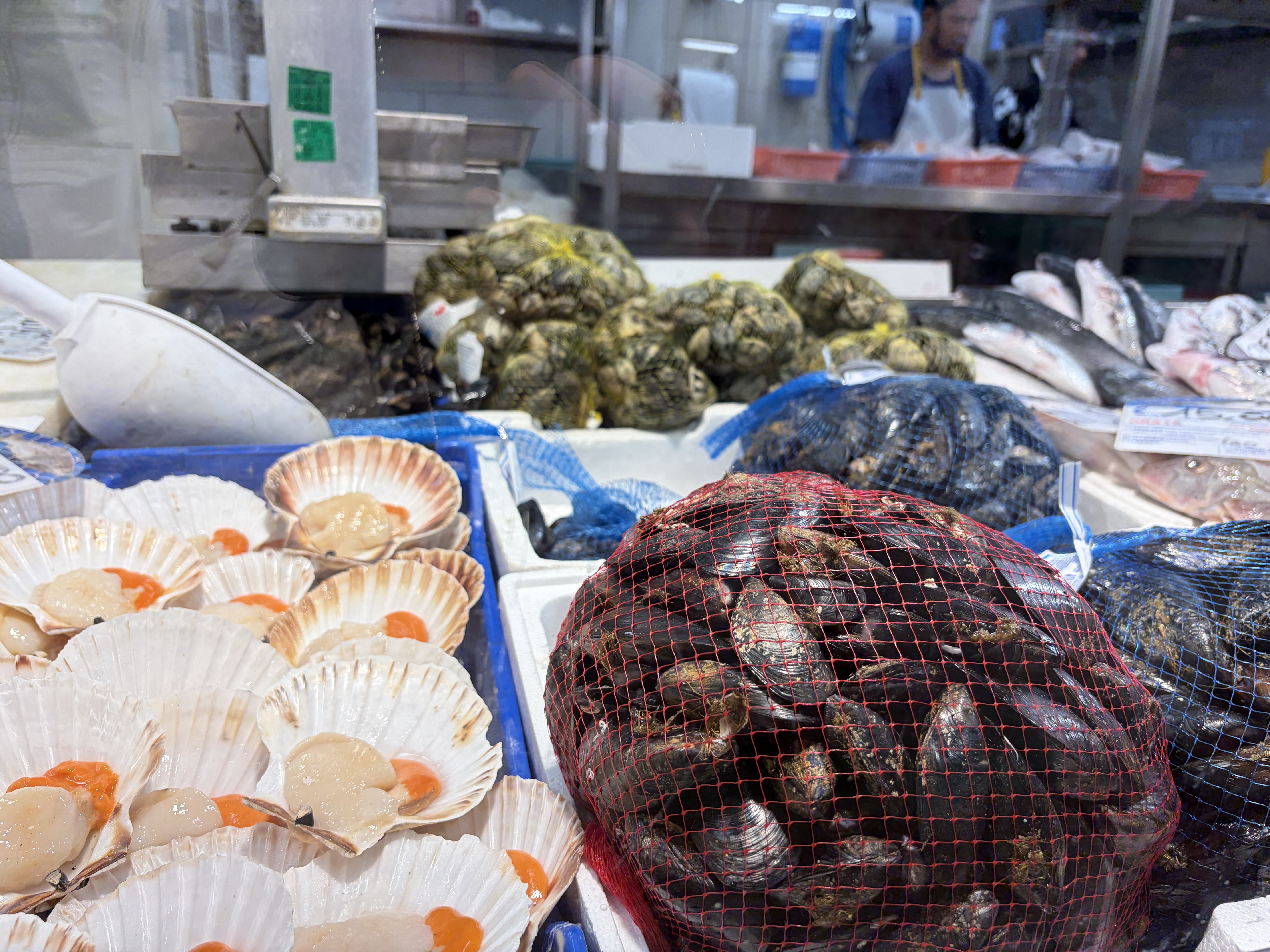
Further into Trionfale, past the produce stalls, the market shifts register entirely. The fish counters are louder, colder, glistening — crushed ice under rows of red mullet, anchovies still faintly silver, whole branzino with their eyes still clear, a sure sign of a good catch. Here, touch isn't really an option, so the relationship works differently: you trust the eyes, and you trust the person.
A good fishmonger will tell you, unprompted, what came in that morning and what's been sitting since yesterday — because his reputation depends on it, in a way a supermarket shelf never has to answer for. He'll tell you the mullet is better today than the branzino, or that the anchovies are perfect for frying tonight but won't hold until tomorrow. There's no packaging trying to convince you otherwise. Just his word, built on years of the same customers coming back.
My nonna never questioned this. She'd ask what was good that day, and let the answer shape dinner, rather than arriving with a fixed idea of what she wanted and hoping the counter could match it.
What We Lose When We Shop on Autopilot
My grandmother never bought for the week. She bought for the day — for the meal that was coming that evening, chosen almost backward: not "what do I feel like cooking," but "what looked good today, and what will I make with it." There's a kind of trust in that. A willingness to let the market decide part of your menu.
Compare that to the modern ritual: a list written in advance, a fluorescent-lit aisle, everything available in every season, chosen mostly for convenience. Nothing wrong with it, exactly — just quieter. Less relationship. Less contact. Less community.
Bringing a Little of It Back
You don't have to shop at a market every day to borrow a little of this philosophy. Even once a week — even one trip, one conversation with someone who actually knows what they're selling, one piece of fruit chosen by hand or one fish chosen by eye instead of by habit — is enough to remember what my nonna knew instinctively: that food tastes better when you've had a relationship with it before it ever reached your kitchen.